
Parts of a chimney flashing
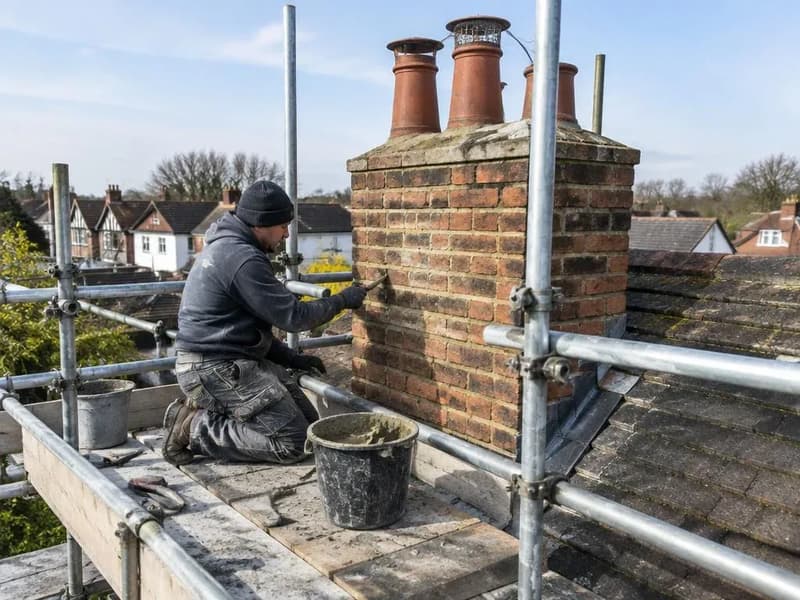
A chimney that comes through a pitched roof needs several pieces of lead working together:
- Front apron: across the downhill face, lying over the tiles below.
- Step flashings: up each side, cut to follow the brick courses.
- Soakers: on some tile and slate roofs, pieces under each tile at the side.
- Back gutter: behind the stack, carrying water around it.
If any one part fails, water gets into the roof beside or behind the chimney. The back gutter is a frequent problem because debris collects there and it's hard to see from the ground.
Abutment flashing
Where a lean-to, porch or extension roof meets a house wall, abutment flashing does the same job along the join. On a sloping abutment it's usually stepped; on a flat or horizontal one it's a straight cover flashing. The top edge goes into a mortar joint, so when that mortar crumbles, the lead comes loose and rain runs down behind it.
Common flashing faults
- Mortar or sealant at the top edge washed out, so the lead pulls away.
- Lead lifted by wind and no longer lying flat on the tiles.
- Cracks where lead pieces were too long and couldn't move with temperature.
- Thin, old lead worn through, or patched with bitumen or tape.
- Cement fillets used instead of lead, now cracked away from the wall.
How a lead flashing repair is done
First we confirm the flashing really is the cause, by checking the area from the roof and, where possible, the loft. Then the repair is matched to the fault. Lifted lead is dressed back and the top edge re-fixed with lead wedges and fresh pointing. Cracked or worn pieces are cut out and new lead is formed in their place, with correct laps and lengths so it can expand. Where cement fillets have failed, they're usually replaced with proper lead flashing. Tiles or slates next to the flashing may need lifting and refixing.
Lead flashing repair cost
The cost of lead flashing replacement depends on how much lead is involved, whether it's a whole chimney or one side, the height and access, and whether the stack needs repointing at the same time. A chimney often needs both, and doing them together saves setting up access twice; see our chimney repair page. We quote in writing after a visit.
Is it the flashing or something else?
Damp near a chimney can also come from porous brickwork, a missing chimney cap or failed flaunching, and stains near an abutment can be condensation. If you're still trying to trace water, our roof leaking guide explains how to narrow it down.
Book a visit
We repair flashing on homes and commercial buildings across Somerset and Devon, within about 50 miles of Taunton. Call 07399 680142 or use the contact form for a free written quote. More on valleys and other leadwork is on our lead roofing page.