
Why people choose a rubber roof
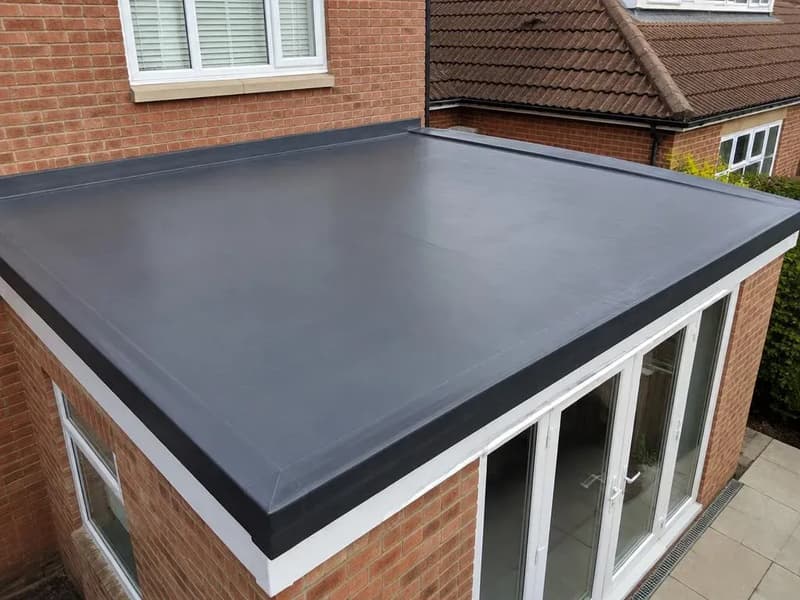
An EPDM flat roof stays flexible in frost and summer heat, so it tolerates the small movements every building makes. On a typical extension or garage the membrane comes in one piece, which removes the lapped seams that older felt roofs relied on. It is also a cold-applied system: no flame is needed on the roof, which suits jobs close to timber fascias or where a torch would be a concern.
How EPDM roofing is installed
- The old covering is stripped and the deck checked; soft or damp boards are replaced.
- The surface is swept clean and dry, because adhesive won't bond to dust or moisture.
- The membrane is unrolled, left to relax, then folded back half at a time and bonded.
- Corners and upstands are formed, and the sheet is taken up walls under the flashing.
- Edge and drip trims are fixed, and outlets are sealed so water leaves the roof.
The work in step four and five decides whether the roof stays dry. A beautifully flat sheet with a badly formed corner will still leak.
Rubber roof repair
EPDM is tough, but it can be punctured by a dropped slate, a ladder foot or a bird pecking at a seam. Adhesive can also let go at an edge that was not bonded well first time. An EPDM roof repair uses materials made for the membrane: the area is cleaned, primed and covered with a patch or seam tape rolled firmly into place. Bitumen paint or builders' mastic won't hold on rubber, so if you see those on your roof, that's often why it is still leaking. For leaks on any type of flat roof, see our flat roof repair page.
EPDM or fibreglass?
Both are good systems used for different reasons. Rubber copes with movement and goes on quickly. Fibreglass gives a rigid surface that's better under regular foot traffic and around fiddly shapes. Our GRP fibreglass roofs page sets out where that one wins. We'll recommend one after seeing the roof, not before.
What affects the price
Roof area, the number of upstands and penetrations, access, and how much of the deck needs replacing all change the cost. Our flat roof cost guide goes through each one.
Plan the edges before ordering the sheet
The membrane dimensions need to allow for the perimeter, not only the horizontal area. Wall upstands, corners and drip edges use material too, and the finish must direct runoff towards the outlet. An extension with a rooflight needs a different layout from an open rectangular garage. Include these features when discussing rubber roof installation so the proposal can account for the complete system rather than the sheet alone.
Flexibility helps the covering accommodate movement, but it does not remedy loose boards or a weak supporting structure. The deck needs suitable support before bonding begins. If an old covering is staying in place, ask how its suitability will be established and how damp areas will be dealt with. A smooth appearance after installation is not enough to show that everything underneath is dry and secure.
After fitting, avoid storing sharp objects or resting ladder feet on the membrane. Observations from a safe window can reveal debris or a lifted edge without walking on the roof. Report any change early and identify the membrane type when arranging a repair, because compatible materials matter more than a general waterproof label.
EPDM flat roofing around Taunton
We fit and repair rubber roofs on homes and commercial units across Somerset and Devon, within roughly 50 miles of Taunton. Ring 07399 680142 or use the contact form for a free written quote, or go back to our flat roofs overview.