
Why there's no single number
You'll see plenty of figures quoted online for flat roof lifespans, and they vary wildly. That's because the same material can last a very long time on one roof and fail early on another. Three things decide it: the system used, the quality of the installation, and the conditions the roof lives in afterwards.
A well-laid roof with a good fall, sound edges and clear outlets will comfortably outlast a cheaper job on a sagging deck where water sits for days. So rather than give you a number that may not apply, here's what to look at.
What wears flat roofs out
- Ponding. Water that sits in one place for long periods keeps the covering under constant stress and finds any weakness in a joint.
- Sun. Ultraviolet light slowly breaks down many roofing materials, especially older felt, making them brittle.
- Foot traffic. Walking on a roof not built for it, or leaning ladders against it, scuffs and punctures the surface.
- Poor edges and upstands. Trims that lift and wall junctions that were skimped let water in long before the main area wears out.
- Movement. Decking that flexes or shrinks puts strain on the covering, opening splits along board joints.
EPDM, GRP and felt
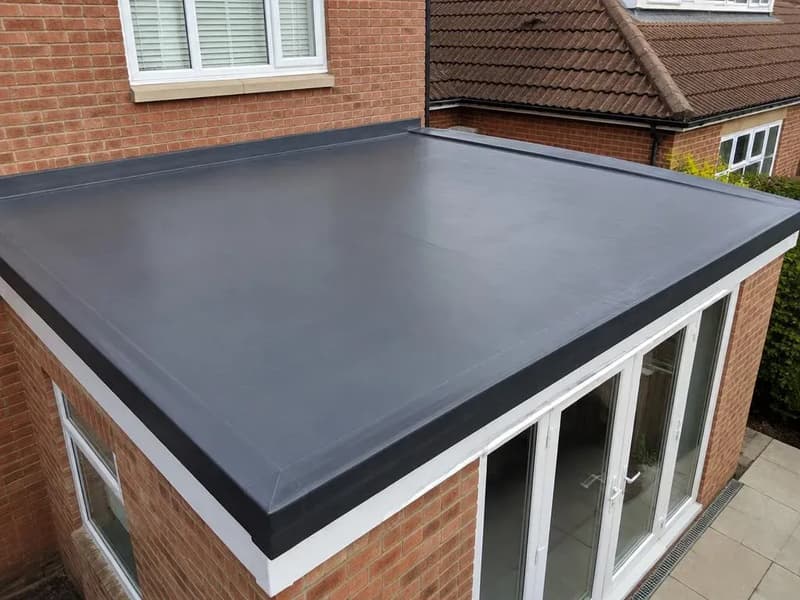
EPDM is a synthetic rubber membrane, usually laid in a single sheet so there are few or no joints across the main area. It stays flexible in cold and heat.
GRP, or fibreglass, is built up on site as a resin and glass-fibre laminate, giving a hard, seamless surface. It copes well with occasional light foot traffic and suits roofs with awkward shapes.
Felt is the traditional option, laid in layers bonded together. Modern felt systems are a big improvement on older ones, and felt remains a sensible choice on many roofs.
Each has its place. Our flat roofs page goes into which suits which kind of roof.
Warning signs
From a safe vantage point, such as an upstairs window, look for blisters or bubbles, cracks or splits, crazing across the surface, edges that have lifted, and moss or puddles that never quite clear. Inside, watch for stains on the ceiling below, a musty smell or plaster that feels soft. If you're already seeing water come through, our guide to a leaking flat roof covers what to do next.
Upkeep that helps
A little attention goes a long way. Keep outlets and gutters clear of leaves so water can drain. Don't let branches rub on the roof. Avoid walking on it unless it was built for that. And have it checked if you notice anything changing, because small repairs are far cheaper than a roof that's been leaking into the deck for a winter.
Repair or replace?
If the roof is generally sound and there's one clear defect, a repair often makes sense. If there are leaks in several places, the deck is soft underfoot, or the covering is brittle and cracked across the whole area, replacement is usually better value. We'll tell you which we think applies when we've seen it.
We fit and repair flat roofs on extensions, garages, dormers and commercial buildings across Somerset and Devon. Call 07399 680142 or send the details through our contact form for a free written quote.